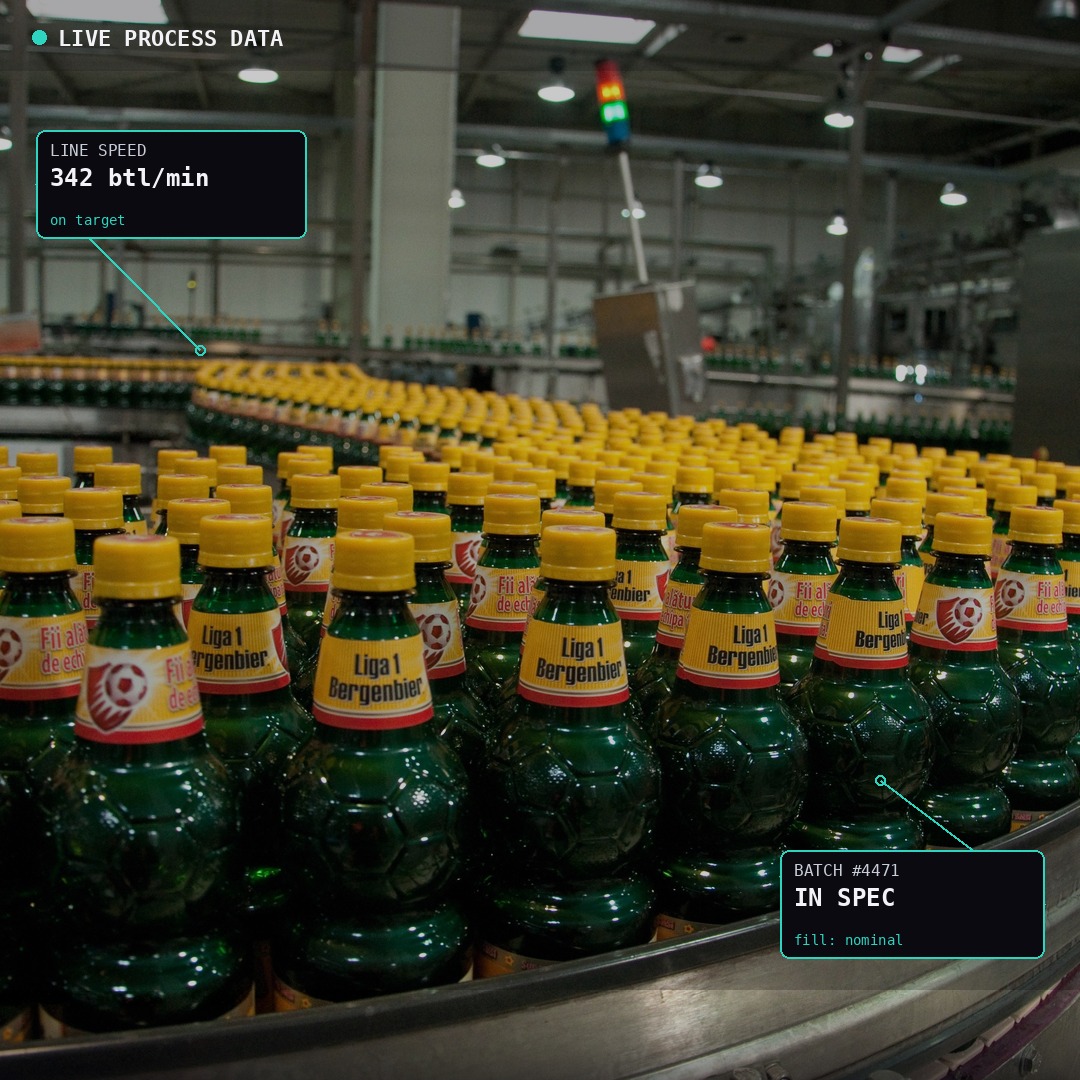
Industrial historians have been around since the 1980s. For most of that history, they belonged almost exclusively to a specific kind of company: Oil & Gas, Chemical and Petrochemical, Pharma, Life Sciences, the sectors with the capital to match the price tag. These industries have spent decades proving the value of historized process data. That was never in question. What was in question, for everyone else, was whether they could afford to find out.
The reason wasn’t the technology. It was the business model built around it.
Why the old model priced out smaller plants
Classic historian vendors built their pricing around the customers they were used to serving: large upfront licenses, a pay-per-tag fee structure, and maintenance contracts that assumed a dedicated OT team on staff. That math works fine at multinational scale. It doesn’t survive contact with a mid-sized manufacturer’s budget. Charging per tag sounds reasonable in the abstract, until you actually count your sensors. A plant with a few hundred monitored points can hit five or six figures a year in licensing before a single dashboard gets built, and that number only grows as more lines or sites get added. For a business running on tighter margins than a multinational, that’s not a rounding error. It’s often the whole difference between a positive and negative return on the investment.
The Automation Revolution changed who could compete
Over roughly the last fifteen years, manufacturing automation stopped being a large-enterprise luxury. An automated packaging line is now a commodity even for a company running a single production line, and automation has worked its way into the production process itself, driving higher throughput and more consistent quality. Once automation is in place, the case for continuous improvement, monitoring, iterating, tightening the process, follows naturally. But historically, for smaller businesses, the perceived cost of setting up a historian to support that continuous improvement work outweighed the perceived benefit. That was never really true. It just looked true, because the only historians on the market were priced for a different kind of customer.
What actually changed the economics
Open-source components, fast fiber-optic networks, and cloud infrastructure matured to the point where a full-fledged process historian no longer requires expensive proprietary licenses or costly dedicated IT infrastructure to run. That shift is what made an affordable historian, genuinely compelling for small and mid-sized businesses as well as large enterprises, possible in the first place. And it didn’t just bring the cost down. It brought the actual design principles of Industry 4.0 within reach of smaller plants too:
- Interoperability — historian data becomes accessible from any device connected to the internet, not locked to a single console
- Information transparency — sensor data automatically matches up with contextual data (which order, which batch, which shift), turning raw numbers into something someone can actually act on
- Technical assistance — equipment gets monitored continuously, with informed decisions and real-time alerts, instead of someone finding out after the fact
Once cost stops gatekeeping the historian, the rest follows
An open, flat-fee historian isn’t just a cheaper version of what a large enterprise gets. It’s a foundation smaller manufacturers can build on the same way bigger ones do. This is no longer a hypothetical: it’s already core product, not a future roadmap item. Ekopak used historian data to build out preventive maintenance as part of its shift toward a “water as a service” model. Helioscreen built a full smart-factory MES on top of the same historian foundation. Algist Bruggeman moved from a proprietary setup to open historian and reporting infrastructure and gained a level of production insight it didn’t have before. None of these are multinational-scale operations. They’re exactly the kind of business the old pricing model used to shut out.
Why this still matters for SMEs specifically
A lot of smaller manufacturers delay adopting a historian because they assume they’ll outgrow it and have to migrate to something else later, effectively paying twice. An open, modular architecture is built to be added to, not replaced. Real-time efficiency monitoring, predictive maintenance models, MES-level functionality, these aren’t separate platforms bolted on later. They’re extensions of the same foundation, which means the choice isn’t “start small now, rebuild everything in three years.” It’s “start with what you need, and everything after that is an addition, not a migration.”
If your current quote from a historian vendor has a per-tag line item on it, that’s worth a second look, especially now that the alternative isn’t a compromise built for a smaller budget, it’s the same architecture larger enterprises are already running on. See what a flat-fee, open historian costs at your scale, or talk to us directly about what you’re trying to solve.
.png)